Why Family-Owned Businesses Are Beginning to Focus on Sustainability Reporting
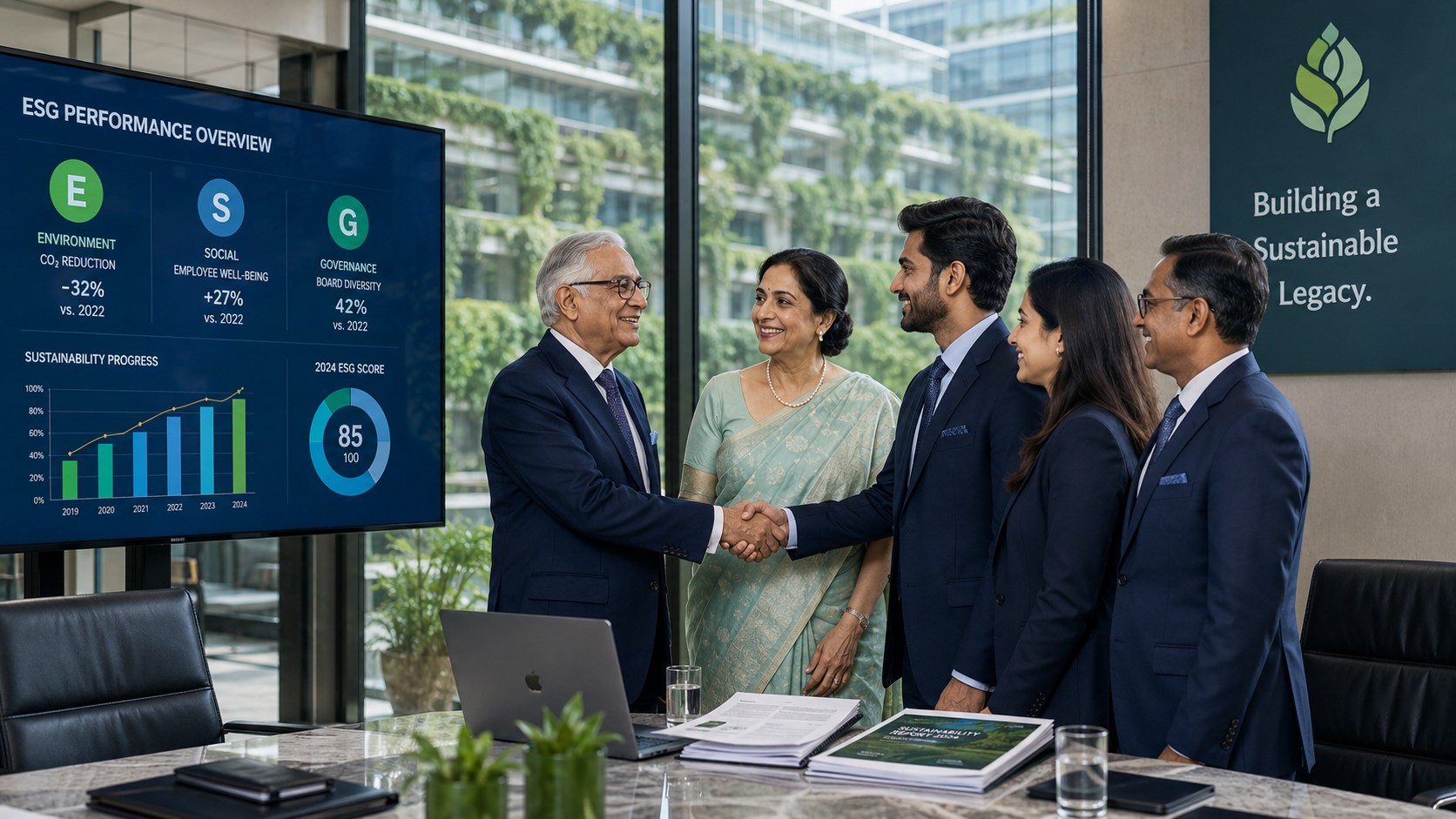
Family-owned businesses have always been guided by a long-term perspective. Unlike businesses driven primarily by short-term financial outcomes, they are often built around continuity, reputation, and the responsibility of preserving the enterprise for future generations. Decisions are therefore evaluated not only for their commercial impact but also for their influence on the business's legacy.However, the environment in which family-owned enterprises operate has changed considerably over the last decade. Customers, financial institutions, institutional investors, regulators, and multinational procurement teams increasingly evaluate how businesses are governed, how operational risks are managed, and whether responsible business practices form part of long-term decision-making.This shift explains why sustainability reporting is no longer limited to India's largest listed companies. Preparing a business responsibility and sustainability report is therefore becoming less about regulatory obligation and more about demonstrating organisational maturity in an evolving business environment.
Why Sustainability Reporting Has Become a Strategic Business Consideration
For many years, governance within family-owned businesses was largely relationship-driven. Business decisions were often centralised, operational knowledge remained with a few individuals, and organisational values were passed through experience rather than documented policies. While this model has helped many businesses grow successfully, it also presents challenges as organisations expand, enter regulated markets, or work with institutional stakeholders.Sustainability reporting addresses this expectation by providing a structured framework to communicate governance practices, environmental responsibility, workforce management, ethical conduct, and long-term business resilience.Although mandatory Business Responsibility and Sustainability Reporting (BRSR) currently applies to the top 1,000 listed entities by market capitalization under the Securities and Exchange Board of India (SEBI) framework, its influence extends well beyond listed companies.
Commercial Relationships Are Increasingly Influenced by ESG Expectations
Procurement practices have evolved significantly. Large corporations no longer evaluate suppliers solely on pricing, production capacity, or delivery timelines. Supplier assessments increasingly include governance standards, environmental practices, occupational health and safety measures, labour policies, and ethical business conduct.If your business supplies listed companies, multinational organisations, or export-oriented manufacturers, sustainability-related questionnaires are becoming a regular part of vendor onboarding and periodic assessments. Businesses that can demonstrate structured governance and documented sustainability practices are often better positioned during supplier evaluations because they reduce compliance and reputational risks for their customers.
Governance Becomes More Critical as Ownership Structures Evolve
Growth naturally introduces organisational complexity. What begins as a closely managed family enterprise gradually develops into a business involving multiple shareholders, professional management teams, external advisors, financial institutions, and independent directors.At this stage, informal decision-making becomes increasingly difficult to sustain. Businesses require documented governance structures, clearly defined responsibilities, internal control mechanisms, and transparent reporting systems.Preparing a business responsibility and sustainability report supports this transition by encouraging organisations to establish measurable governance processes instead of relying solely on institutional knowledge held by individual family members. This creates stronger operational continuity while reducing governance risks during periods of expansion.
Succession Planning Now Extends Beyond Ownership Transfer
For many family businesses, succession planning has traditionally focused on transferring ownership and operational responsibility to the next generation. Today, succession is equally about transferring governance systems capable of supporting a more complex business environment.The next generation of business leaders is entering organisations that operate under greater regulatory scrutiny, increasing stakeholder expectations, and rapidly changing market conditions. They are expected to manage climate-related risks, supply chain compliance, data governance, responsible sourcing, and evolving ESG expectations alongside commercial performance.Documented sustainability reporting provides future leadership with structured information that supports informed decision-making rather than relying exclusively on historical business practices.
Financial Institutions Are Expanding Their Due Diligence Frameworks
Access to finance is also changing. Banks, institutional investors, and private equity firms continue to prioritise financial performance, but governance quality and sustainability-related risks are becoming increasingly relevant during due diligence.Lenders are assessing whether businesses maintain adequate governance frameworks, identify operational risks, comply with regulatory requirements, and demonstrate resilience against emerging environmental and social challenges.Although sustainability reporting does not guarantee access to capital, structured disclosures improve transparency and provide financial institutions with additional information when evaluating long-term business stability.
Regulatory Expectations Continue to Influence Private Businesses
Many family-owned businesses assume that sustainability reporting only applies to listed companies. While mandatory BRSR requirements are currently limited to specified entities, regulatory expectations continue to shape the wider corporate ecosystem.Large listed organisations frequently request ESG-related information from suppliers to strengthen their own disclosures. Export markets increasingly reference internationally recognised sustainability frameworks. Investors are incorporating ESG considerations into investment decisions, and global reporting standards continue to evolve.
Final Thoughts
The discussion around sustainability reporting is no longer confined to listed companies or large corporate groups. It is gradually becoming part of how businesses demonstrate governance, accountability, and preparedness for the future. For family-owned enterprises, adopting a business responsibility and sustainability report is not about changing the values on which the business was built. It is about documenting those values in a way that meets the expectations of today's business environment while strengthening the foundation for the generations that follow.